Harley-Davidson Breakout
€18,950
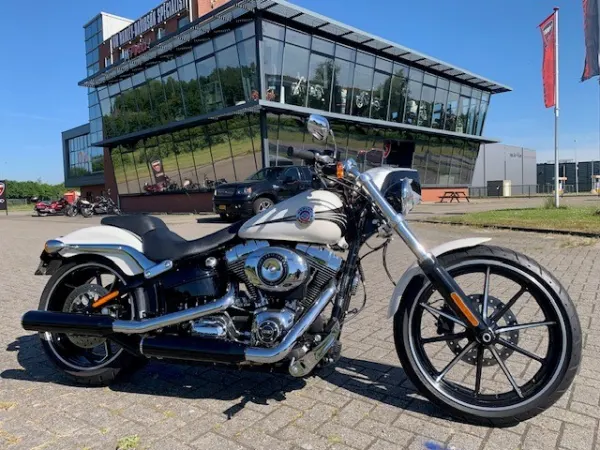
201410,523 km
M-Point BVDrachten
ViaBOVAG.nlMotorOccasion.nl

Compare 81 Harley-Davidson Breakout listings from different years and sales sites.

Harley-Davidson
Breakout
Cruiser · 1,868 cc · 87 hp
See typical prices, price changes and important differences.
Choose the model year and mileage for a price guide.
Based on asking prices, not sale prices. Trim, condition, maintenance and warranty still matter.
Based on price data from 7 of the past 12 months.
Used prices are trending down: the typical asking price is €6,450 lower than in May 2026.
Quick reference values. Model year, generation and trim can differ.
Models in the same category and price range to consider alongside the Breakout.
Features and handling differ by generation. Use this overview to find the right version.
Years2023–present
The current Breakout 117 receives the 1923cc Milwaukee-Eight, larger tank and more torque. This generation assigns only with 1923cc, FXBRS or an explicit 117 reference.
1,923 cc · 103 hp · 2 cyl.
Years2019–2022
The FXBRS Breakout 114 uses the 1868cc Milwaukee-Eight and is the stronger modern version. It is safely distinguished by 1868cc, FXBRS or a full 114 reference, not by the word ‘Breakout’ alone.
1,868 cc · 94 hp · 2 cyl.
Years2018–2020
The FXBR moved to the new Softail frame with the 1745cc Milwaukee-Eight 107. It matches only 1745cc, FXBR or a full Milwaukee-Eight 107 reference so it is not confused with the concurrent 114.
1,745 cc · 87 hp · 2 cyl.
Years2013–2017
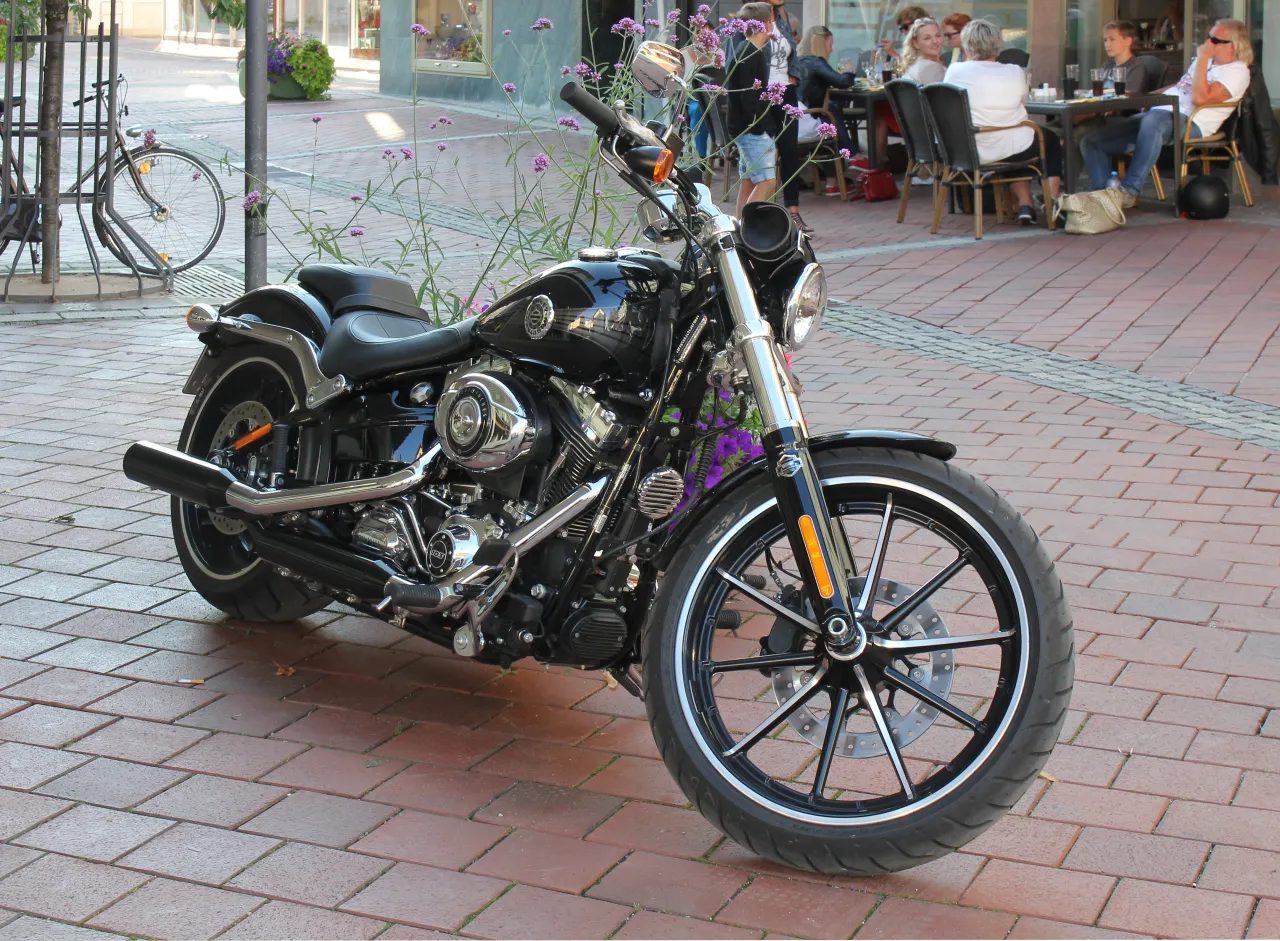
The regular FXSB Breakout uses the 1690cc Twin Cam 103 in the older Softail frame. Its long fork and 240mm rear tyre give it a pronounced dragstyle look; it is not a Milwaukee-Eight model.
1,690 cc · 76 hp · 2 cyl.
Years2013–2014
The CVO Breakout FXSBSE has the 1801cc Twin Cam 110 and higher equipment than the regular FXSB. Only CVO/FXSBSE, 110 or 1801cc is sufficient evidence for this version.
1,801 cc · 91 hp · 2 cyl.
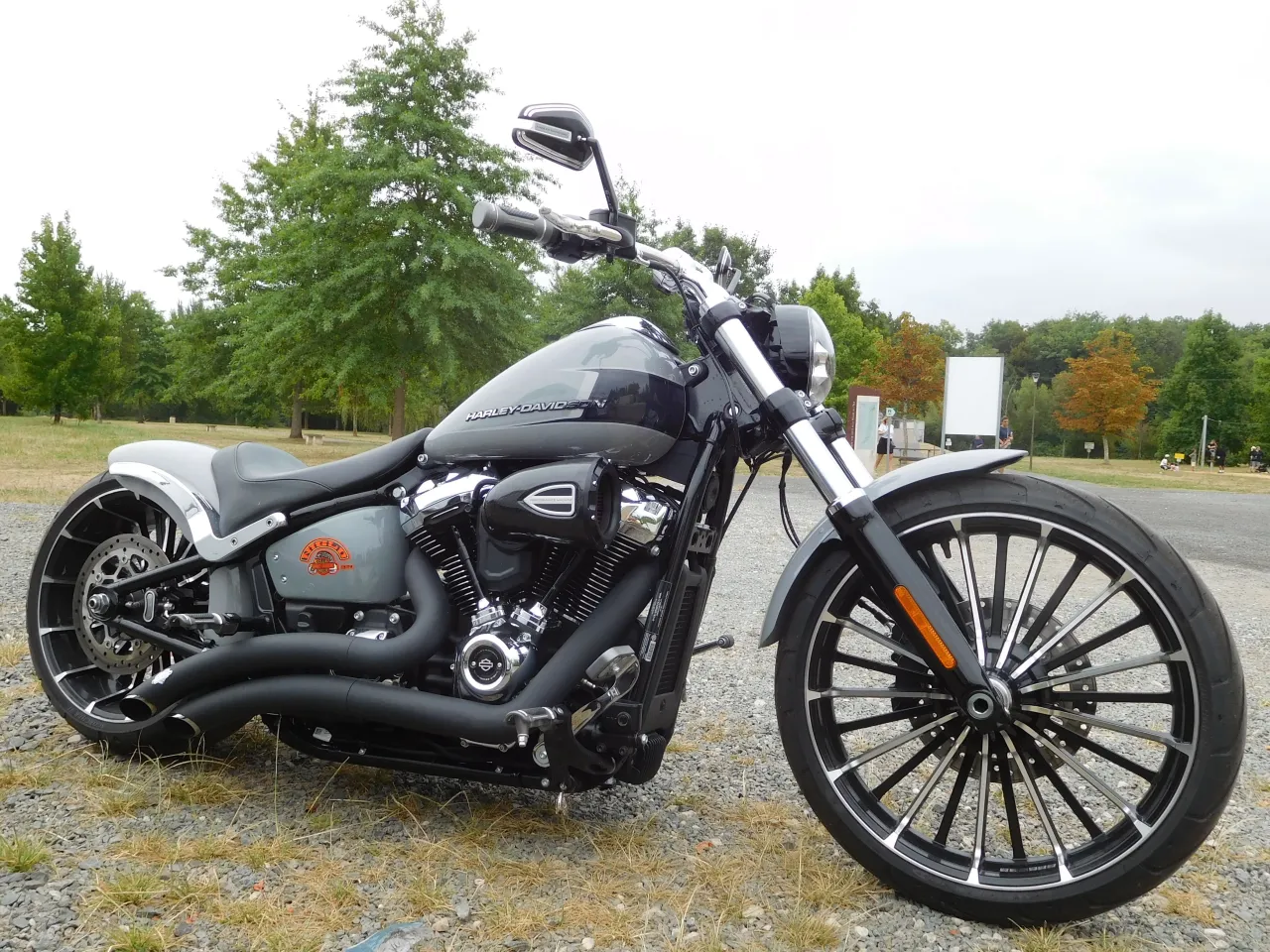
The Harley-Davidson Breakout (FXSB/FXBR) is a Softail chopper distinguished by a wide 240 mm rear tyre, a low-slung frame and a stripped-back silhouette. The first generation (2013–2017) uses the Twin Cam 103 with 1690 cc; the second generation (2018–present) employs the Milwaukee-Eight 114 at 1868 cc with more torque. Both versions feature a raked-out fork and a hidden monoshock rear suspension that delivers the hardtail look.
The Breakout is built for riders who want to make an impression. The wide rear tyre and long tank give it a stretched, dominant presence. A low 680 mm seat height keeps it accessible for shorter riders. The wide tyre and weight limit urban agility compared to a standard cruiser, but on motorways and open roads it finds its element. It competes with the Triumph Rocket 3 and Indian Chieftain for riders drawn to extravagant design.
Check the wide 240 mm rear tyre for uneven wear; accelerated tyre consumption is a known downside of the wide-tyre format.
Inspect the primary chain and compensator for noise or play on higher-mileage examples.
Look for oil seepage around the rocker boxes and primary cover on both Twin Cam and Milwaukee-Eight variants.
Check the extended fork geometry for worn steering head bearings, which can reduce precision in tight cornering.
A used Harley-Davidson Breakout costs €22,990 on average. Most cost €16,999 to €33,795. This is based on 81 motorcycles for sale now.
MotorMonitor now compares 81 used Harley-Davidson Breakout motorcycles from Dutch sales sites.
The average used Harley-Davidson Breakout is from 2017 and has done about 14,134 km.
The Harley-Davidson Breakout produces between 75 and 102 hp, depending on model year and version.
The Harley-Davidson Breakout weighs about 298 kg.
The top speed of the Harley-Davidson Breakout is around 175 km/h.
The seat height of the Harley-Davidson Breakout is about 680 mm.