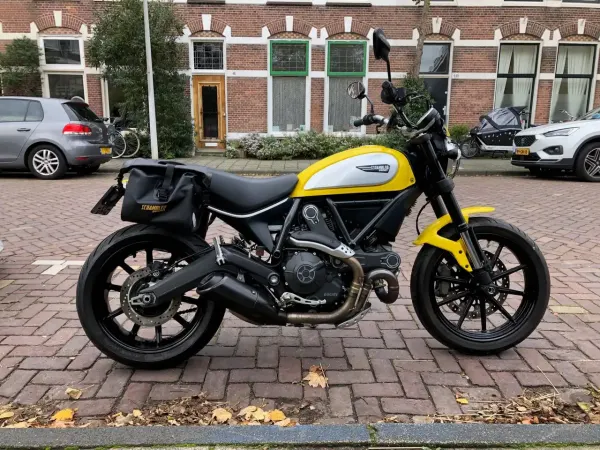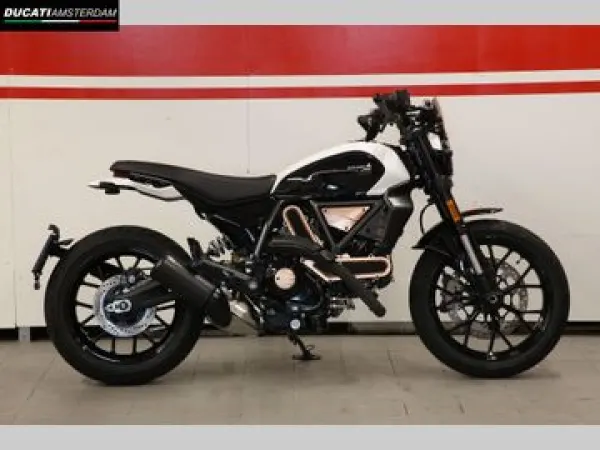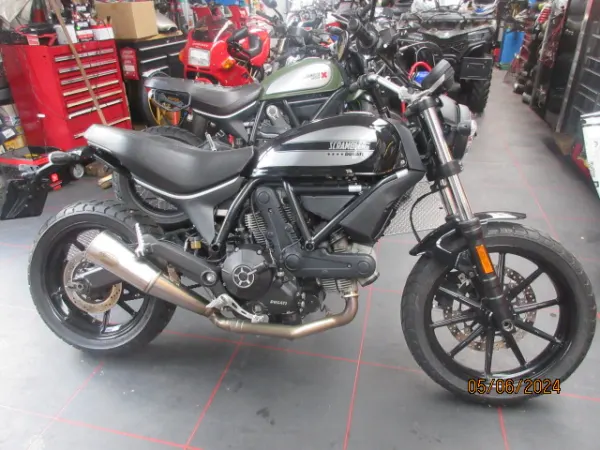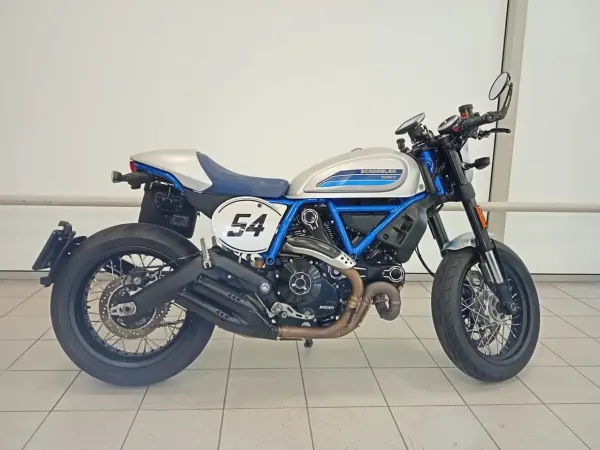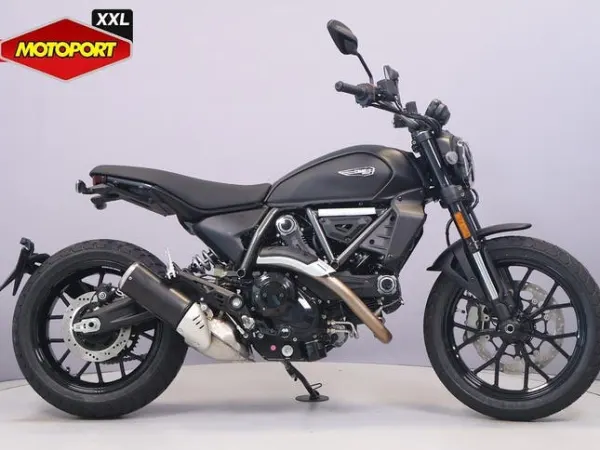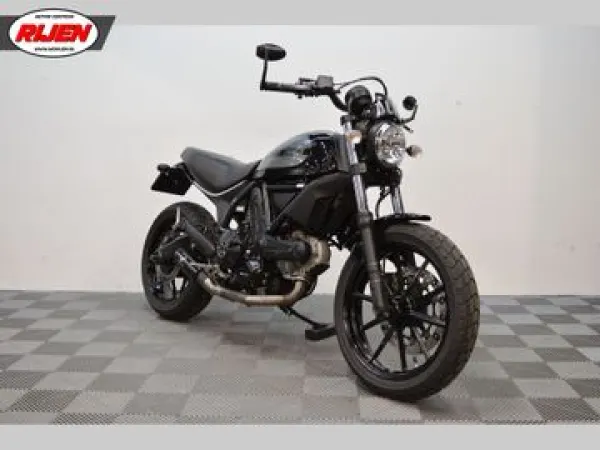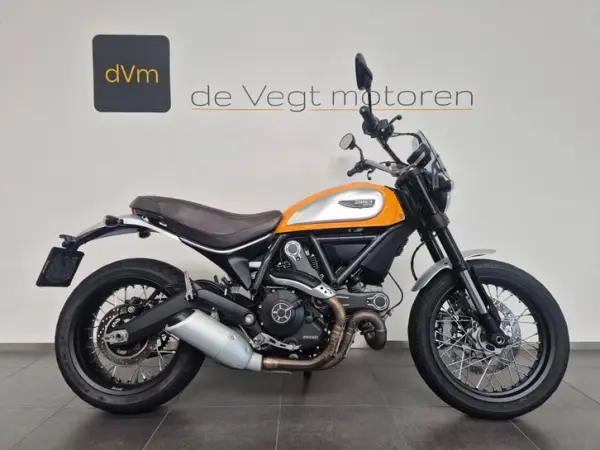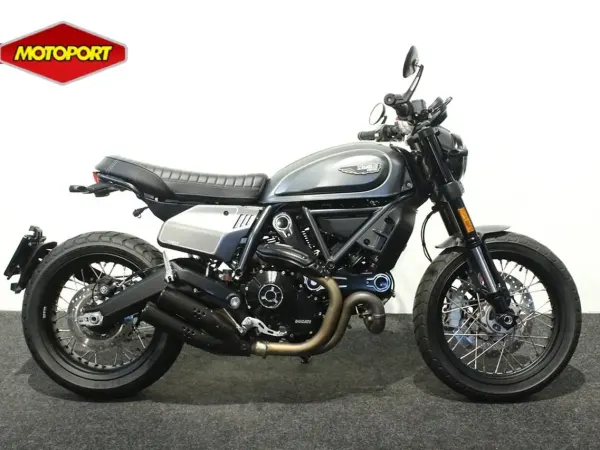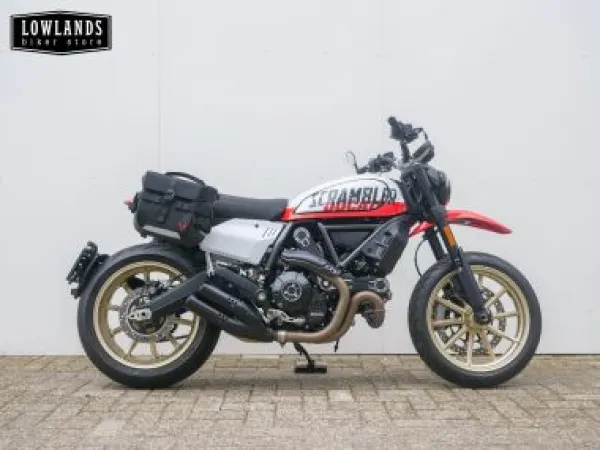
Ducati Scrambler
€7,995
20223,650 km
Lowlands Biker StoreZwolle
Dealer website



Ducati
Scrambler
Classic · 803 cc · 73 hp
See typical prices, price changes and important differences.
Choose the model year and mileage for a price guide.
Based on asking prices, not sale prices. Trim, condition, maintenance and warranty still matter.
Based on price data from 7 of the past 12 months.
Used prices are trending down: the typical asking price is €1,000 lower than in May 2026.
Quick reference values. Model year, generation and trim can differ.
Models in the same category and price range to consider alongside the Scrambler.
Features and handling differ by generation. Use this overview to find the right version.
Years2023–present
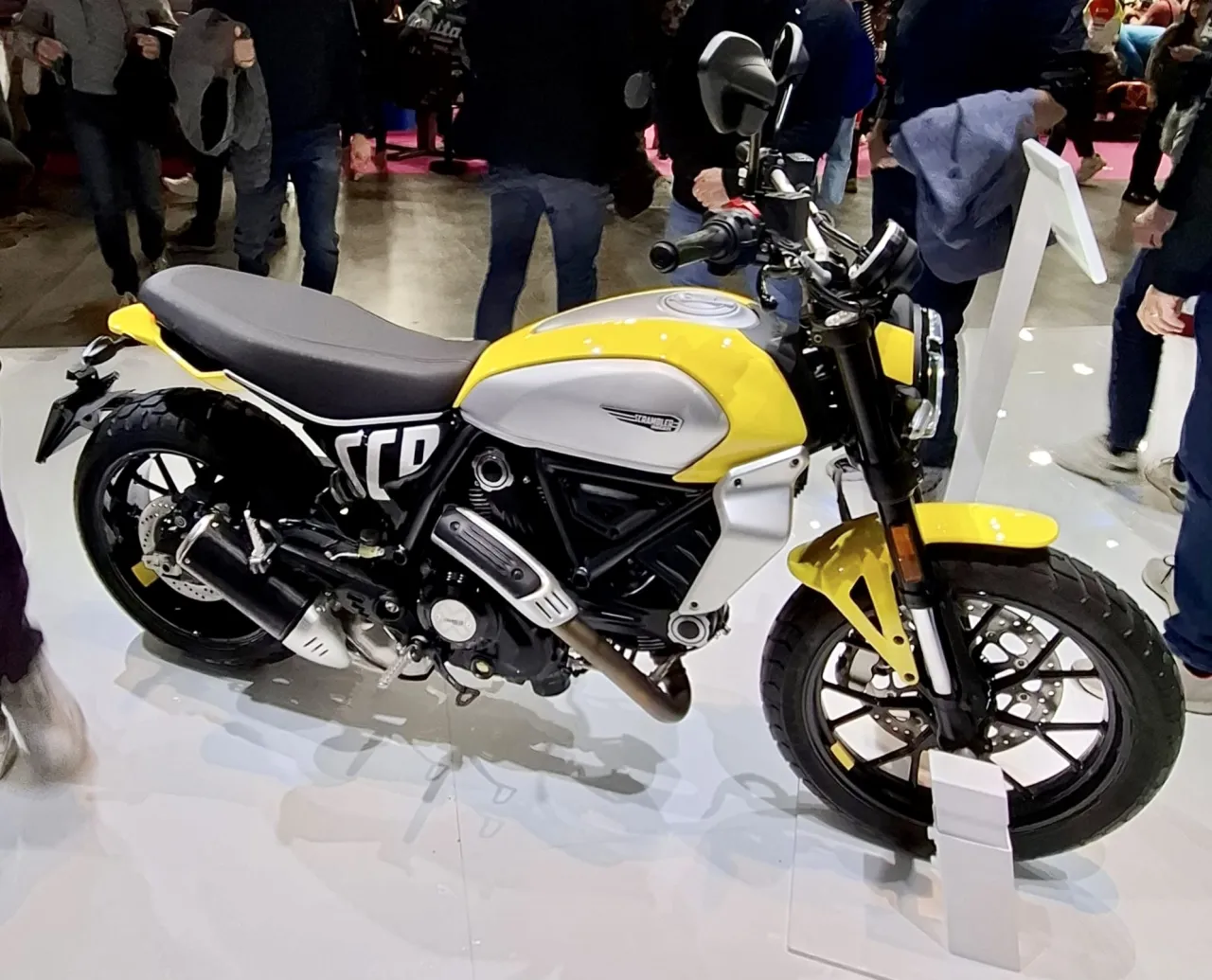
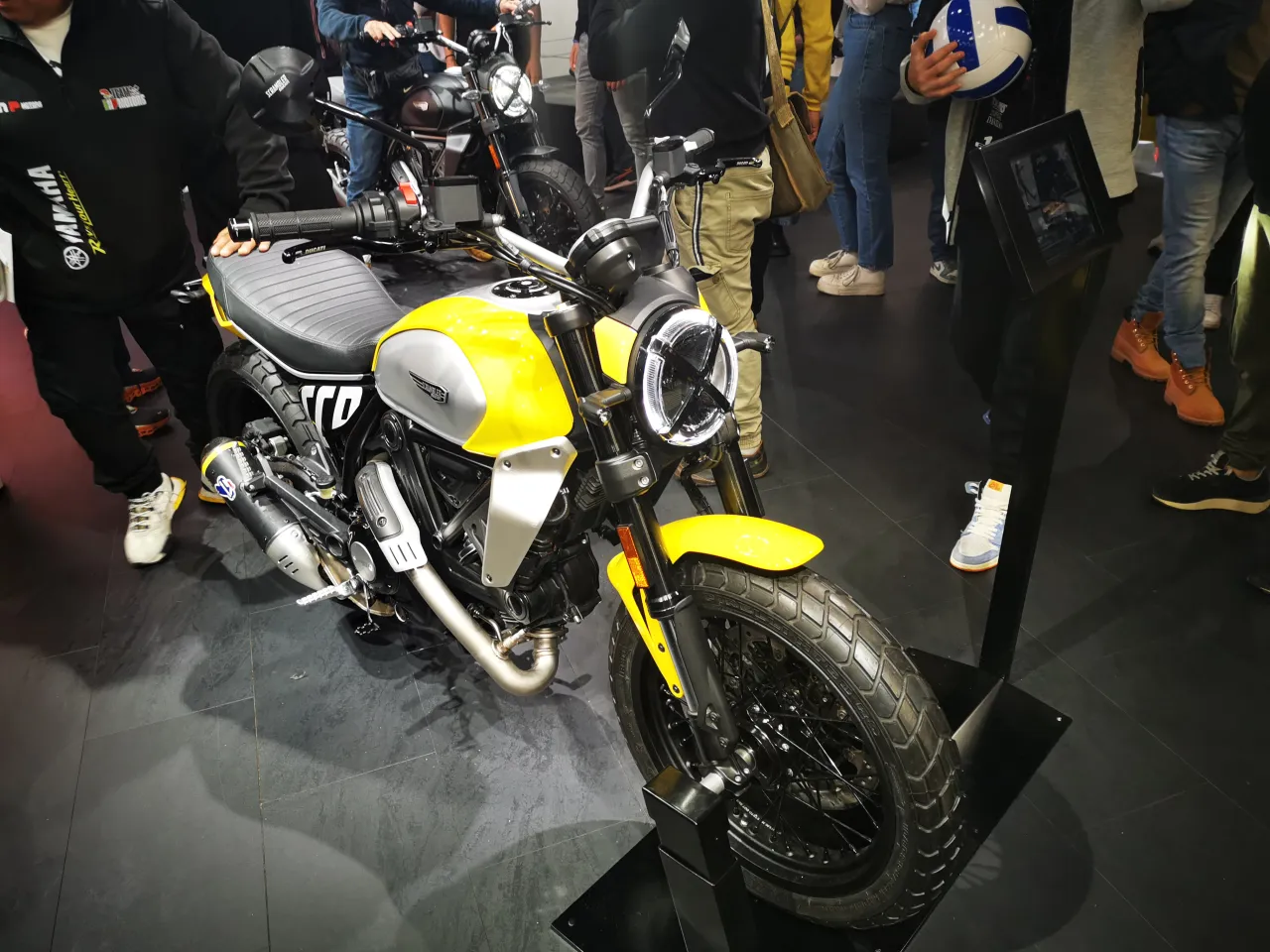
The second Scrambler generation adds ride-by-wire and TFT, but the standard 803cc version is not A2-eligible without official restriction and documentation.
803 cc · 73 hp · 2 cyl.
Years2015–2022
The first modern Scrambler uses the air-cooled 803cc L-twin. The standard version is not A2-eligible without an officially restricted version and documentation.
803 cc · 73 hp · 2 cyl.
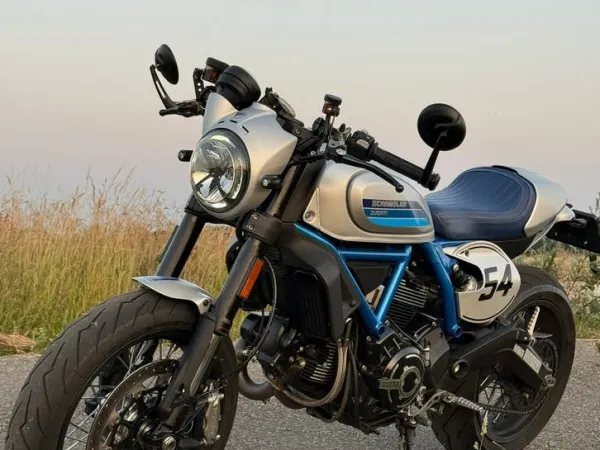
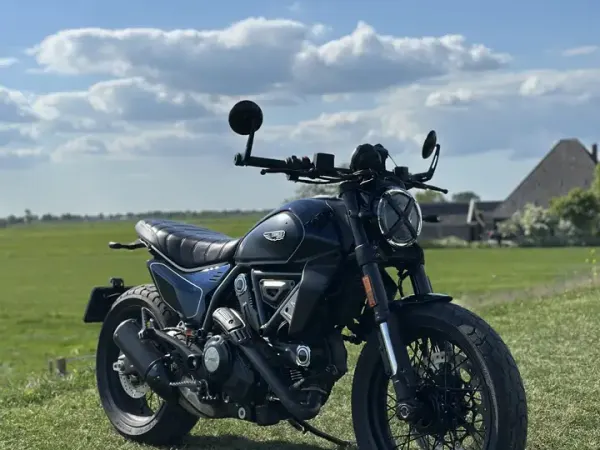
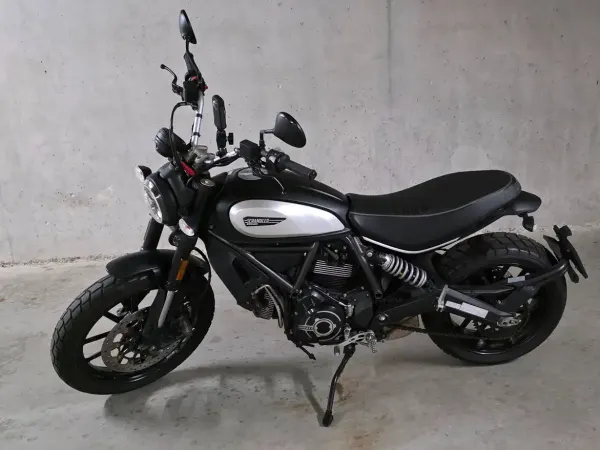
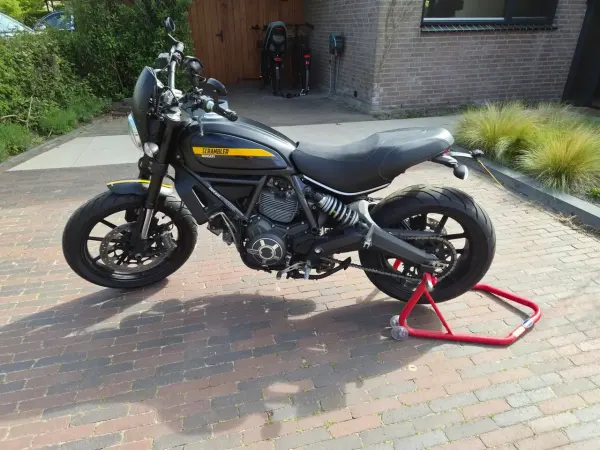
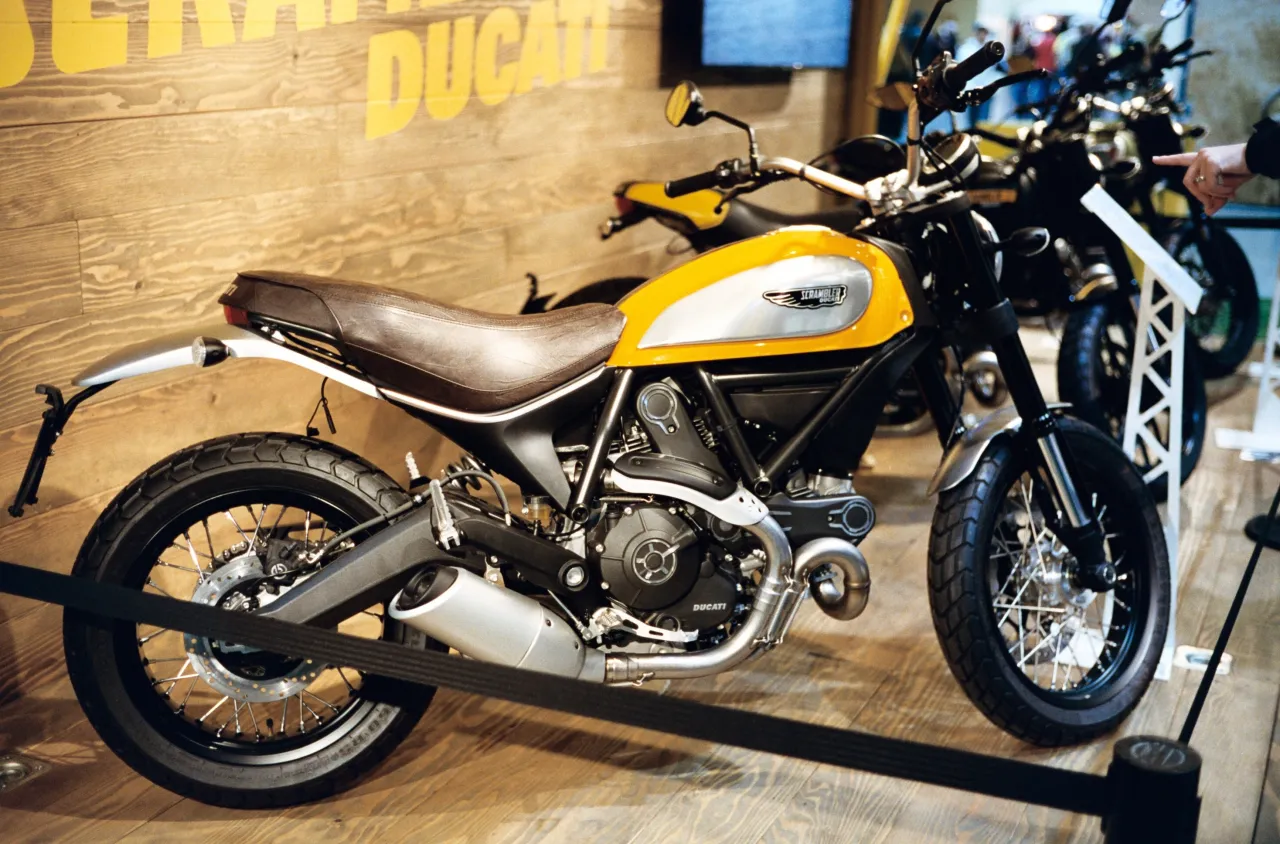
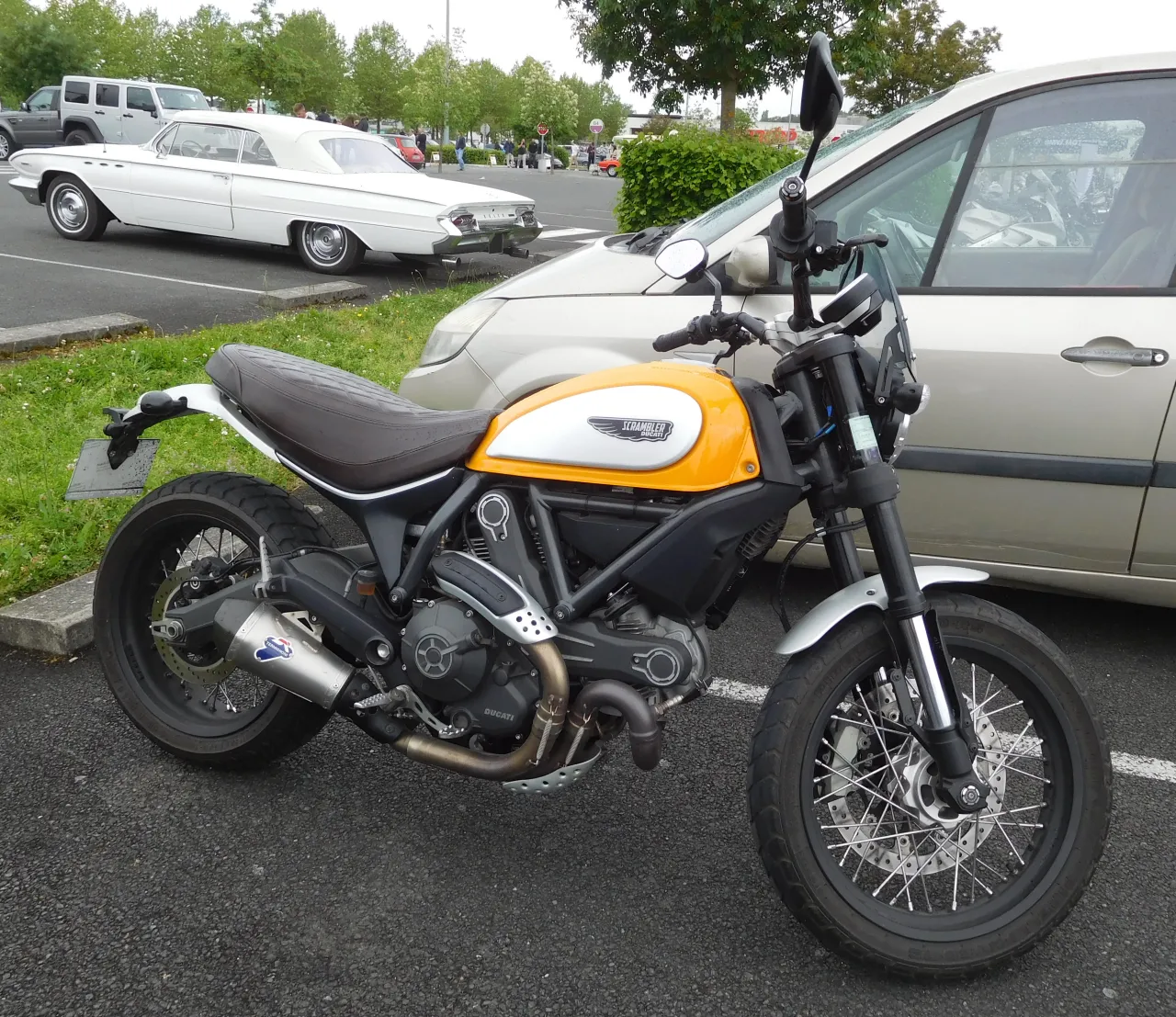
The Ducati Scrambler launched in 2015 as a stand-alone sub-brand built around an air/oil-cooled 803cc L-twin with desmodromic valves, a 90 degree V-angle and a torquey, short-stroke character. Output is roughly 73 hp and 67 Nm, plenty for city, back roads and relaxed touring. A tubular steel trellis frame, wide flat bar and 18/17 inch wheel combo give the bike its upright stance and easy steering. Within a few years the family expanded into Icon, Classic, Full Throttle, Cafe Racer and Desert Sled trims, all sharing the same engine and chassis.
The Scrambler targets riders looking for an affordable, approachable Ducati without the committed ergonomics of a Monster or Panigale. A low 798 mm seat, light clutch action and a smooth, predictable power delivery make it a sensible first big bike or A2-restrictable option. Direct rivals are the Triumph Street Twin/Speed Twin 900, BMW R nineT Pure and Yamaha XSR700. ABS has been standard since 2016, and from 2019 the higher trims gained a new TFT-style cluster and cornering ABS. The Scrambler is less suited to long motorway stretches due to wind blast and a modest tank.
Check the service log for valve clearance inspection (every 12,000 km) and the 2-year timing belt replacement; deferred maintenance is expensive on desmo twins.
Listen on cold start for the dry-clutch rattle on pre-2018 versions (APTC); some plate noise is normal but heavy rattle means it needs new plates.
Inspect the regulator/rectifier and battery terminals for corrosion; early Scramblers can charge weakly at idle.
Look closely at the silencer and exhaust flange bolts for hairline cracks and blown gaskets, particularly with after-market Termignoni cans.
Assess bars, tank and seat for crash damage; many Scramblers were a first big bike and dropped at low speed, leaving scuffs and tank dents.
A used Ducati Scrambler costs €7,950 on average. Most cost €5,820 to €12,190. This is based on 53 motorcycles for sale now.
MotorMonitor now compares 53 used Ducati Scrambler motorcycles from Dutch sales sites.
The average used Ducati Scrambler is from 2019 and has done about 11,926 km.
The Ducati Scrambler produces 72 hp (54 kW).
The Ducati Scrambler weighs about 189 kg.
The top speed of the Ducati Scrambler is around 200 km/h.
The seat height of the Ducati Scrambler is about 798 mm.